Shandong Heze Yellow River Management Section Bottom Protection Quadrangular Block Project
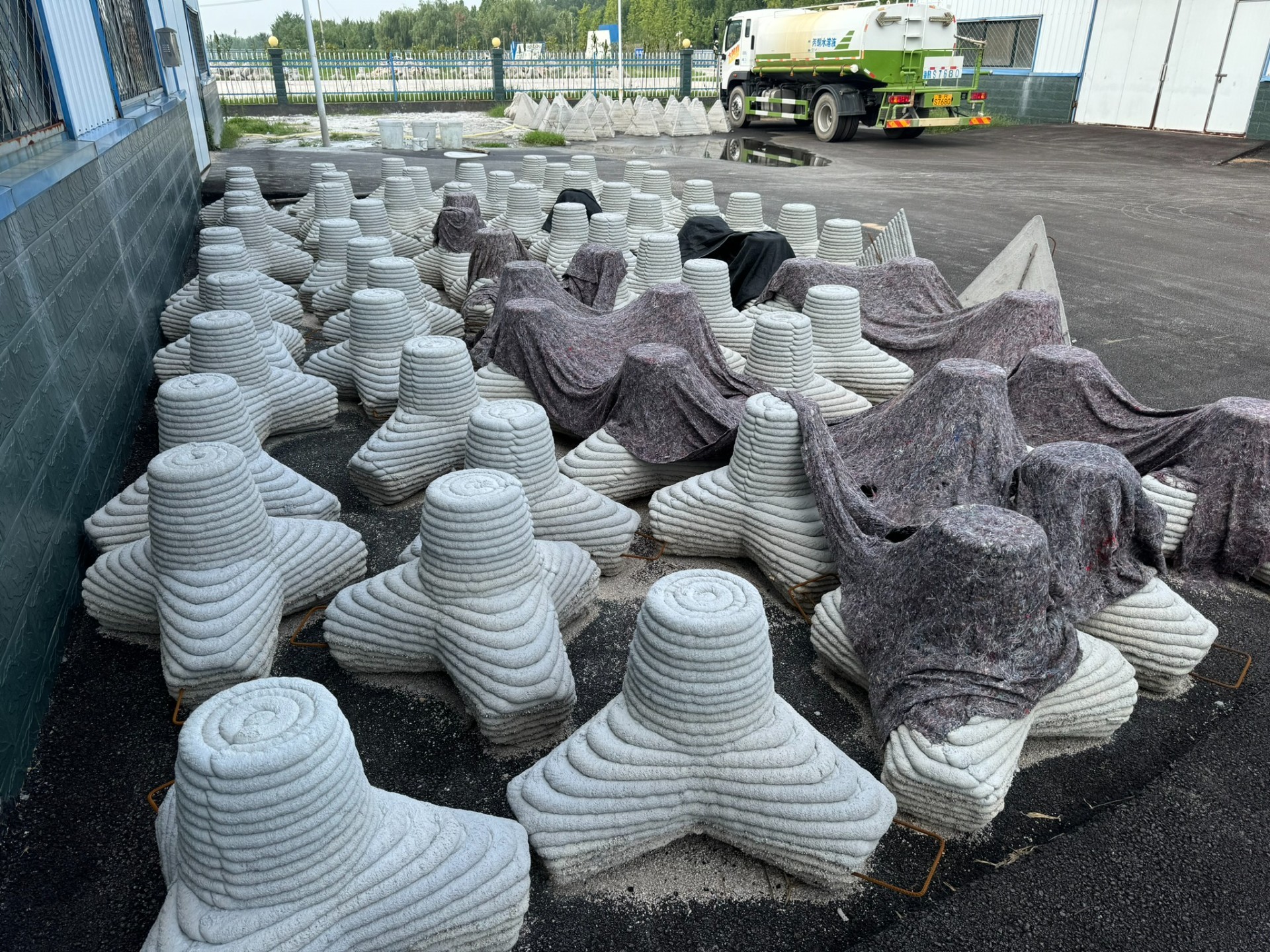
As one of the first irregularly shaped, pyramidal wave-damping blocks in China to be constructed using 3D printing, it was completed in Juancheng County, Heze City, Shandong Province. It served as a key material for flood control and disaster relief during the 2024 flood control and dispatching exercise organized by the river management department.
Project Info
Project Details
On June 27, 2024, the first batch of tetrahedral wave-damping blocks in China, constructed using 3D printing, was completed in Juancheng County, Heze City, Shandong Province. During the 2024 flood control and dispatching exercise organized by the river management department, these blocks served as key filling materials for flood prevention and disaster relief. They played a crucial supporting role in thoroughly implementing the spirit of General Secretary Xi Jinping's important speeches, instructions, and directives on flood control and disaster relief, and in testing the effectiveness of the Yellow River flood control plan and flood preparedness work. Tetrapods, also known as protective blocks or dolosses, are large concrete blocks placed along coastlines or riverbanks to absorb the impact of waves or floods to protect the coastline or riverbank. They typically resemble regular tetrahedrons in shape. As an important filling material for protecting riverbanks, they have played a vital role in safeguarding the safety of the Yellow River dikes. This project, commissioned by the Yellow River Conservancy Commission and constructed by Three Gorges University and Wuhan Xiaonan Intelligent Technology Co., Ltd., saw the project's flood control and drought relief command center representative explain that the Juancheng breakwater block supply project is the first pilot project to utilize 3D printing technology. Compared to traditional dumping blocks, this technology offers higher printing efficiency, saves labor, is environmentally friendly and low-carbon, reduces material consumption, eliminates the need for templates, has a high surface roughness, provides better protection, and is more cost-effective. Furthermore, after strength testing, it meets sufficient strength requirements. As part of the emergency flood control material reserve, it effectively supports the local Yellow River Conservancy Commission's flood control and disaster relief efforts, playing a vital role in ensuring the safety of the basin's floodwaters.
Project Details
On June 27, 2024, the first batch of tetrahedral wave-damping blocks in China, constructed using 3D printing, was completed in Juancheng County, Heze City, Shandong Province. During the 2024 flood control and dispatching exercise organized by the river management department, these blocks served as key filling materials for flood prevention and disaster relief. They played a crucial supporting role in thoroughly implementing the spirit of General Secretary Xi Jinping's important speeches, instructions, and directives on flood control and disaster relief, and in testing the effectiveness of the Yellow River flood control plan and flood preparedness work. Tetrapods, also known as protective blocks or dolosses, are large concrete blocks placed along coastlines or riverbanks to absorb the impact of waves or floods to protect the coastline or riverbank. They typically resemble regular tetrahedrons in shape. As an important filling material for protecting riverbanks, they have played a vital role in safeguarding the safety of the Yellow River dikes. This project, commissioned by the Yellow River Conservancy Commission and constructed by Three Gorges University and Wuhan Xiaonan Intelligent Technology Co., Ltd., saw the project's flood control and drought relief command center representative explain that the Juancheng breakwater block supply project is the first pilot project to utilize 3D printing technology. Compared to traditional dumping blocks, this technology offers higher printing efficiency, saves labor, is environmentally friendly and low-carbon, reduces material consumption, eliminates the need for templates, has a high surface roughness, provides better protection, and is more cost-effective. Furthermore, after strength testing, it meets sufficient strength requirements. As part of the emergency flood control material reserve, it effectively supports the local Yellow River Conservancy Commission's flood control and disaster relief efforts, playing a vital role in ensuring the safety of the basin's floodwaters.