11

XN-CYBOT 1500

Model: XN-CYBOT 1500

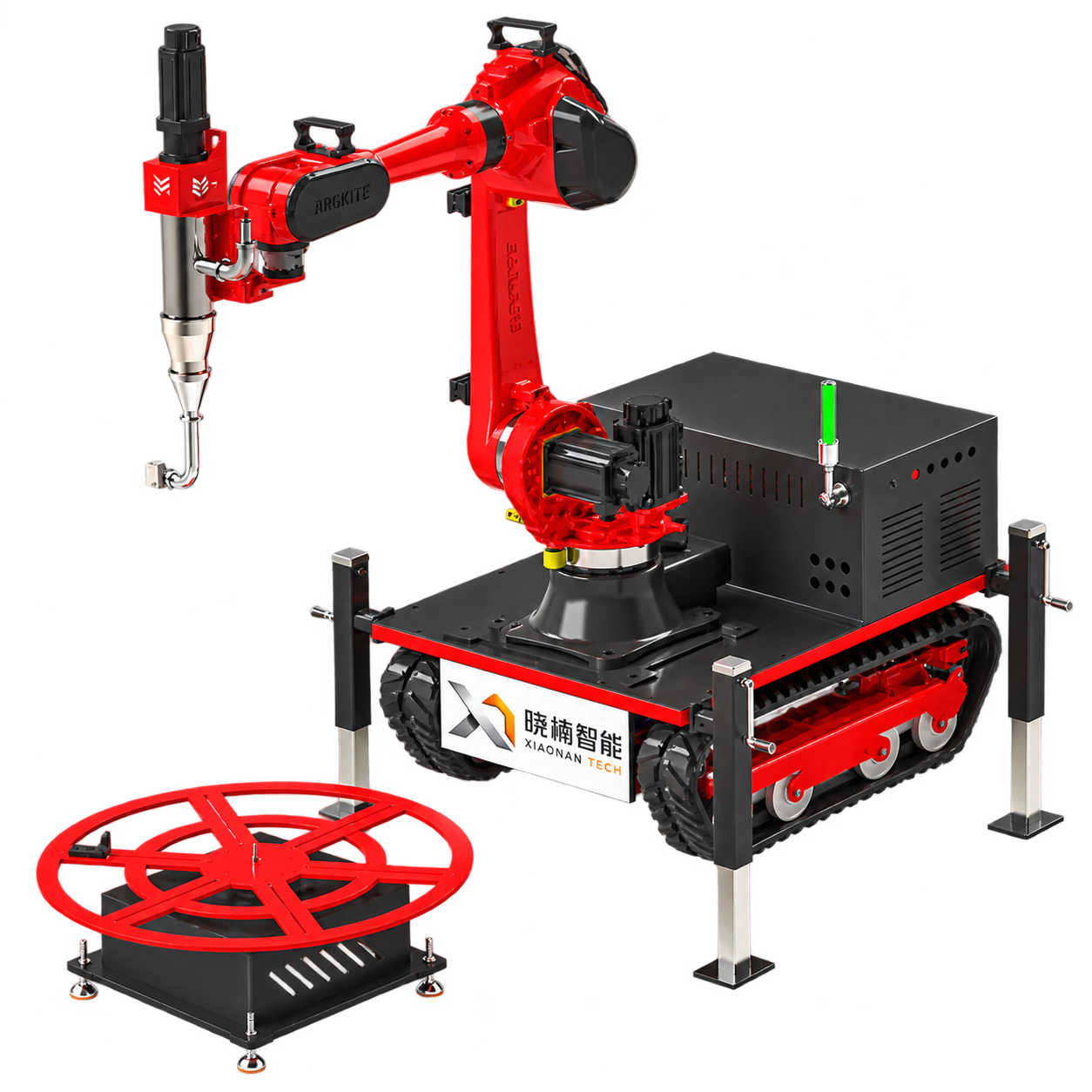
XN-CYBOT 1500 is a mobile multipurpose six-axis industrial hybrid manufacturing system integrating concrete 3D printing, CNC machining and engraving, grinding, and spraying. Its six-axis industrial robot and mobile chassis provide a working envelope of 1500 × 1500 × 1500 mm for complex concrete components, artistic forms and on-site digital manufacturing.
mobile 3D printersix-axis robotconcrete 3D printinghybrid manufacturingCNC machiningrobotic engravingautomated grindingautomated spraying

Equipment Parameters

Manufacturer
武汉晓楠智能科技有限公司
Build Volume
1500x1500x1500mm

Equipment Details

XN-CYBOT 1500 Mobile Six-Axis Hybrid Manufacturing System

XN-CYBOT 1500 is a mobile industrial system that integrates additive manufacturing, subtractive machining and surface finishing.

Built around a six-axis industrial robot, the system combines a mobile chassis with configurable end effectors for concrete-mortar 3D printing, CNC machining and engraving, grinding, and spraying. Its effective working envelope is 1500 × 1500 × 1500 mm.

Concrete 3D printing

A dedicated mortar-feeding and extrusion system deposits material layer by layer along digitally generated toolpaths, enabling the production of complex surfaces, non-standard components and customized concrete products.

CNC machining and engraving

With the appropriate machining tool installed, the system can perform CNC cutting, trimming and engraving for contour machining, detail correction and surface shaping.

Automated grinding

A grinding end effector can be used to finish printed or conventionally manufactured parts, improving surface consistency and preparing the component for subsequent finishing processes.

Automated spraying

An optional spraying system follows programmed trajectories to coat complex surfaces with improved consistency and automation.

Flexible six-axis motion

The six-axis industrial robot can approach the workpiece from multiple directions, making it suitable for complex surfaces, spatial toolpaths and non-planar additive manufacturing.

Mobile working platform

The mobile chassis allows the equipment to be transferred between working areas. After positioning, the support system secures and levels the platform for on-site and multi-station operation.

Integrated additive and subtractive workflow

A component can first be near-net-shaped through concrete 3D printing, followed by machining, engraving and grinding. Spraying can then be applied as the final surface-finishing process.

Typical applications

  • Concrete component 3D printing
  • Architectural decoration and landscape elements
  • Sculptures, art installations and complex forms
  • Non-standard molds and curved components
  • Finishing and grinding of printed parts
  • Automated spraying
  • On-site digital construction and manufacturing
  • Multi-process robotic manufacturing research

Each process requires the corresponding end effector, feeding system and auxiliary equipment. Actual working range, accuracy and productivity depend on the selected tools, materials, process settings and site conditions.

Technical Specifications

Item Specification
Model XN-CYBOT 1500
Product class Mobile industrial-grade
Equipment structure Six-axis industrial robot with mobile chassis
Effective working envelope 1500 × 1500 × 1500 mm
Additive process Concrete-mortar extrusion 3D printing
Subtractive processes CNC machining, trimming and engraving
Surface-finishing processes Automated grinding and spraying
Printing material Concrete mortar formulated for 3D printing
Tool configuration Configurable or interchangeable process-specific end effectors
Operating mode Fixed-station or mobile on-site operation
Applications Concrete components, landscape elements, artistic forms, CNC machining and surface finishing

Equipment Details

XN-CYBOT 1500 Mobile Six-Axis Hybrid Manufacturing System

XN-CYBOT 1500 is a mobile industrial system that integrates additive manufacturing, subtractive machining and surface finishing.

Built around a six-axis industrial robot, the system combines a mobile chassis with configurable end effectors for concrete-mortar 3D printing, CNC machining and engraving, grinding, and spraying. Its effective working envelope is 1500 × 1500 × 1500 mm.

Concrete 3D printing

A dedicated mortar-feeding and extrusion system deposits material layer by layer along digitally generated toolpaths, enabling the production of complex surfaces, non-standard components and customized concrete products.

CNC machining and engraving

With the appropriate machining tool installed, the system can perform CNC cutting, trimming and engraving for contour machining, detail correction and surface shaping.

Automated grinding

A grinding end effector can be used to finish printed or conventionally manufactured parts, improving surface consistency and preparing the component for subsequent finishing processes.

Automated spraying

An optional spraying system follows programmed trajectories to coat complex surfaces with improved consistency and automation.

Flexible six-axis motion

The six-axis industrial robot can approach the workpiece from multiple directions, making it suitable for complex surfaces, spatial toolpaths and non-planar additive manufacturing.

Mobile working platform

The mobile chassis allows the equipment to be transferred between working areas. After positioning, the support system secures and levels the platform for on-site and multi-station operation.

Integrated additive and subtractive workflow

A component can first be near-net-shaped through concrete 3D printing, followed by machining, engraving and grinding. Spraying can then be applied as the final surface-finishing process.

Typical applications

  • Concrete component 3D printing
  • Architectural decoration and landscape elements
  • Sculptures, art installations and complex forms
  • Non-standard molds and curved components
  • Finishing and grinding of printed parts
  • Automated spraying
  • On-site digital construction and manufacturing
  • Multi-process robotic manufacturing research

Each process requires the corresponding end effector, feeding system and auxiliary equipment. Actual working range, accuracy and productivity depend on the selected tools, materials, process settings and site conditions.