XN-MONSTER 100G
Model: XN-MONSTER 100G
XN-MONSTER 100G is a large-format industrial gantry concrete 3D printer developed for on-site additive construction. It provides a printing envelope of 10 × 10 × 6 m and has been used for the on-site printing of a 110 m² two-story villa.
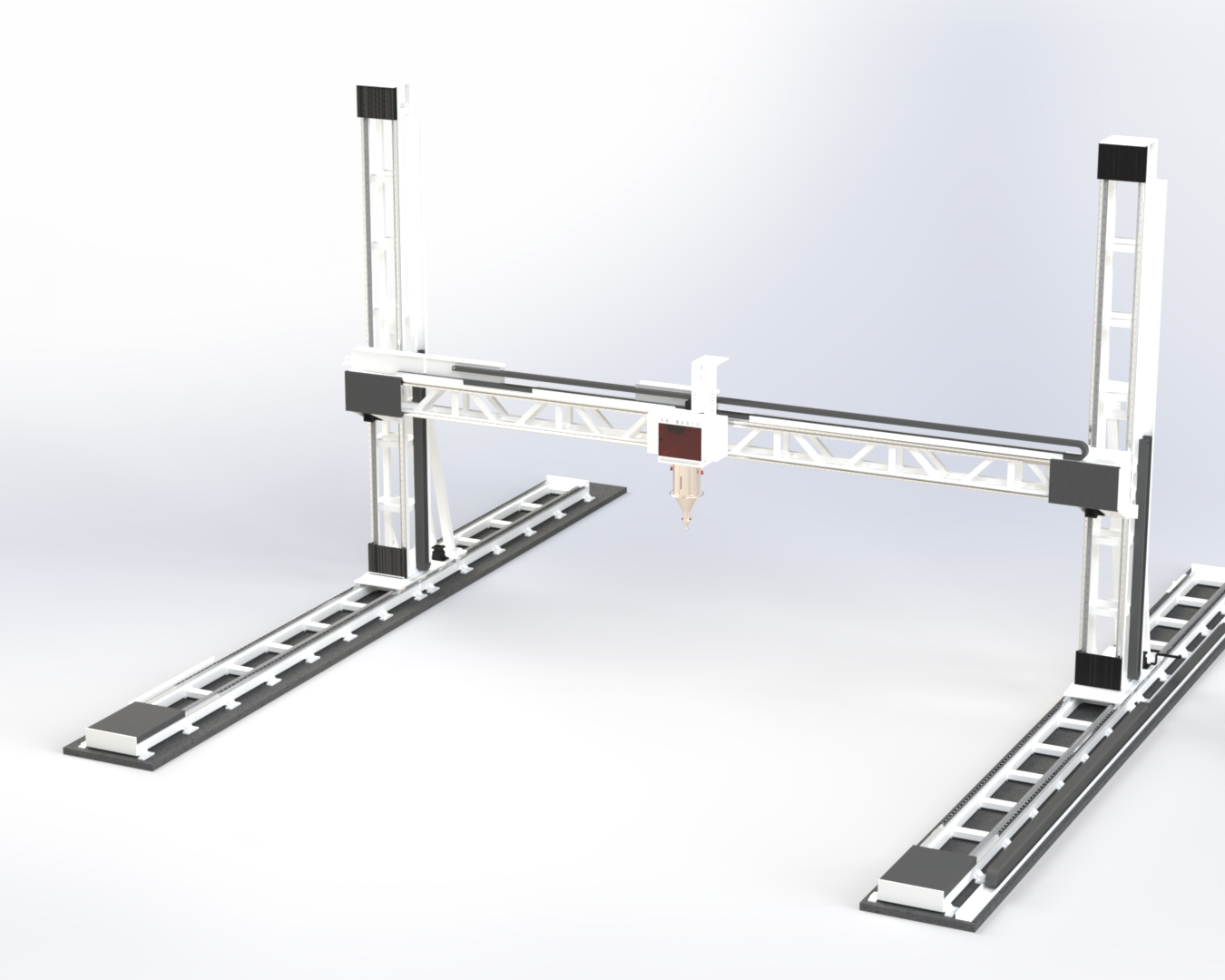
XN-MONSTER 100G
Equipment Details
XN-MONSTER 100G Large-Format Construction 3D Printer
XN-MONSTER 100G is a large-format industrial gantry concrete 3D printer developed for on-site additive construction. It provides a printing envelope of 10 × 10 × 6 m.
The system has been used for the on-site printing of a 110 m² two-story villa, demonstrating its application in medium- and large-scale residential construction.
Large construction-printing envelope
The 10 × 10 × 6 m printing envelope supports applications including residential walls, architectural components, landscape structures and large complex forms.
Heavy-duty gantry structure
The industrial gantry architecture provides a stable large-span motion platform for the printing system. Its modular structure facilitates transportation, on-site assembly and project deployment.
On-site additive construction
The system can be installed and commissioned at the construction site. Concrete mortar is then deposited layer by layer along toolpaths generated from the digital building model, reducing the need to transport large printed components.
Proprietary control system
The machine is equipped with a proprietary concrete 3D printing control system for building-model processing, print-job management and motion-path control.
Printing speed, layer height, extrusion volume and other process parameters can be configured according to the model, material and construction requirements.
Modular deployment
The gantry structure can be disassembled for transportation and assembled according to the project site, building dimensions and construction conditions.
Typical applications
- Rural housing and supporting buildings
- Rural-development demonstration projects
- Cultural-tourism buildings and accommodation
- Landscape structures and public facilities
- Architectural walls and large concrete components
- Construction 3D printing research and demonstration
- Customized buildings and complex curved structures
Project application
XN-MONSTER 100G has been used for the on-site printing of a 110 m² two-story villa, providing a practical application example for medium- and large-scale additive construction.
Construction 3D printing projects require coordinated structural design, material formulation, construction planning and on-site engineering. Final building performance and acceptance criteria are subject to the project documentation, material test results and applicable construction standards.